
Podcast for sales. Invite your prospects as guests.
 By Alon Shkuri, producer Published
A podcast for sales works when your prospects are the guests. You invite the buyers who never answer a cold call to talk about their own work, so the relationship starts with something you give. guestjourney.ai did this with 62 hotels on Future of Hospitality, a show we produce, and 28 became customers. Below is why it works, who it pays off for, and how to follow up without a pitch.
Why it works when cold outreach doesn't
The better the prospect, the more often someone asks them for a meeting. Hotel owners hear from dozens of software companies a week, and almost none of it gets an answer. Arjan Eikelenboom, co-founder of guestjourney.ai, called and emailed the hotels he wanted as customers: nobody picked up and nobody wrote back. When the same company invited the same hotels onto a podcast, nearly all of them said yes.
The difference is the order. Cold calls, cold email and ads ask for something first: time, attention, a meeting. An invitation gives first: a stage, a conversation about their work, and an episode they can share. In the same hour you build a relationship with the person you want to reach and make content your buyers want to watch. When the guest shares it, their network sees it, from someone they trust, about a problem rather than your product.
What came of it: 62 hotels
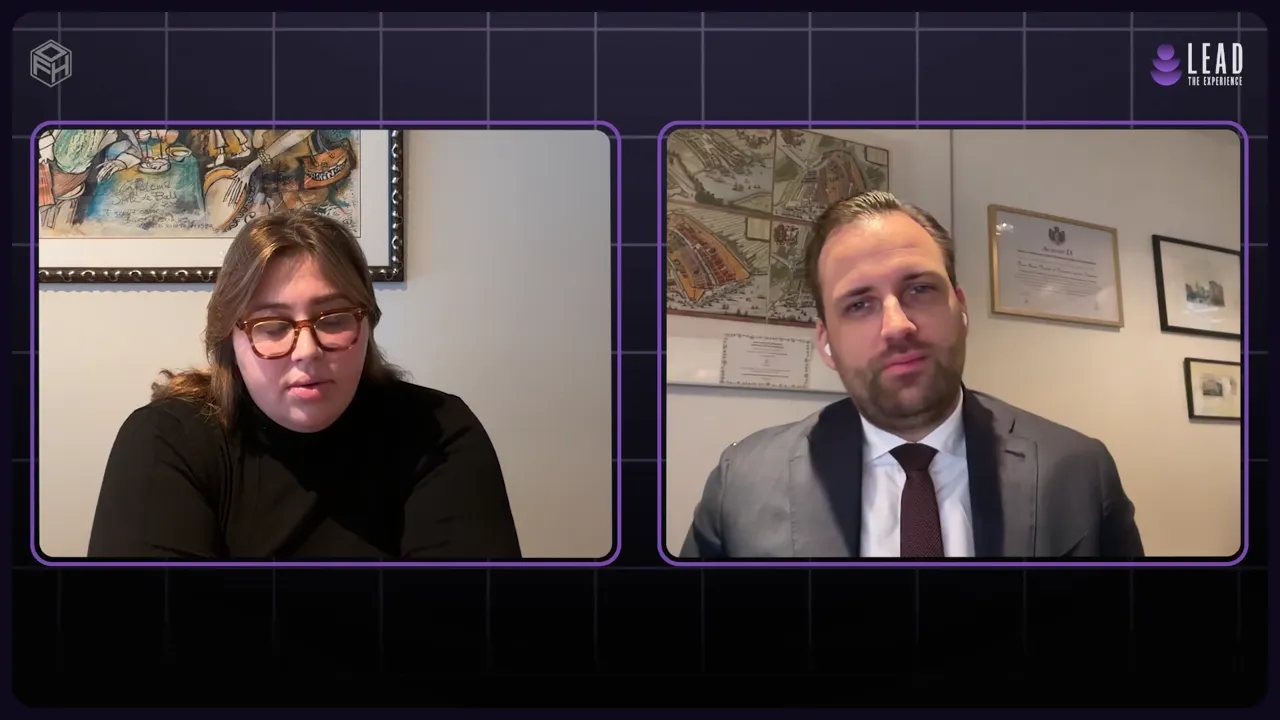
guestjourney.ai started Future of Hospitality and invited the hotels it wanted as customers. Over time, this is what came of it.
| Of the 62 hotels invited | Hotels | Share |
|---|---|---|
| Became a warm relationship | 40 | 65% |
| Became a customer | 28 | 45% |
| Did not buy, but referred a customer | 6 | 10% |
The rest still counted. Some guests were never going to buy and were invited for the show: a well-known name lifts the podcast and makes the next yes easier. Some moved to another hotel and became a customer there. And the ones who were not interested still made an episode, which is marketing you would otherwise pay for.
How these figures were counted, over which period, and what they don't tell you is in our research on podcast guests to customers.
Who it pays off for
This is for a founder or sales director of a B2B company that sells into one industry and can name the customers it wants. An episode takes time and money, so it pays off when a customer is worth enough: as a rule of thumb, a deal of $500 or more. Count the whole customer, not the first invoice: one worth $500 a year who stays three years is worth $1,500. And a customer you win this way tends to bring referrals. The white paper does the arithmetic with our prices.
How to start
- Record your first episode with a customer, or someone you know. You learn the format with someone who already likes you, and you have an episode to show the next guest.
- Invite a few people from your own network: former colleagues, partners, people you met at events.
- Write down your ideal customer profile: titles, companies, markets.
- Invite from that list, in your name. By email in the US and the UK, with your postal address and an opt-out; through LinkedIn and your own network in the EU. What the rules allow per country is in our guide to podcast guests.
The invitation, the briefing and the guest release are free in our Guest prep kit.

Plan the follow-up during the recording
Before you record, decide what you would like to talk about a week or two later, and ask a question that leads there. If you sell revenue software, ask how the guest sets prices on a busy weekend. The answer tells you whether there is a fit, and it gives you a reason to get back in touch. Which questions get usable answers is in our guide to interview questions.
Agree on how you work before the recording, too. Tell the guest they get the episode, their own clips and a media kit, and ask one question: will you share it, yes or no? Most say yes, and then they have decided before the episode exists.
Do not pitch the day after. Wait until the episode is live, the guest has posted it and their network has reacted: that is the high point. Then, at least a week later, ask for a conversation, not a demo.
Hi [first name],

Thanks again for the episode. The clip about [topic] is doing well.

You mentioned [what they said that fits what you do]. We happen to be working on [what you do] for exactly that. Could I run it by you? Twenty minutes, and I'd like your view, not to pitch you.

[your name]
What can go wrong
- Rescheduling takes work. Use one booking link, send a reminder, and when someone cancels, send a new link the same day.
- Some guests don't want to post. Ask before the recording, not after.
- Larger companies may want to review the episode. Ask up front, and put it in the guest release.
- Not every guest buys. Count the content and the relationship anyway; people change jobs.
On Future of Hospitality, not one guest failed to show up.
Next: roundtables and the industry's podcast
Once the show runs and you have done a few one-on-ones, invite several people at once. guestjourney.ai ran roundtables with two prospects and a partner it wanted to work with: three relationships in one recording. One step further, give the podcast its own name and site, so it becomes the industry's podcast rather than your sales channel. Future of Hospitality now has ten hosts, and that made more guests say yes.
How we do it
With Lead engine, we invite the people on your list in your name and run every guest from yes to thank-you. The whole playbook, with the arithmetic, the follow-up and a one-page checklist, is in the free white paper Give the mic to your prospects.
Sources
- Own data: guestjourney.ai and Future of Hospitality: hotels invited, warm relationships, customers and referrals, November 2026.